
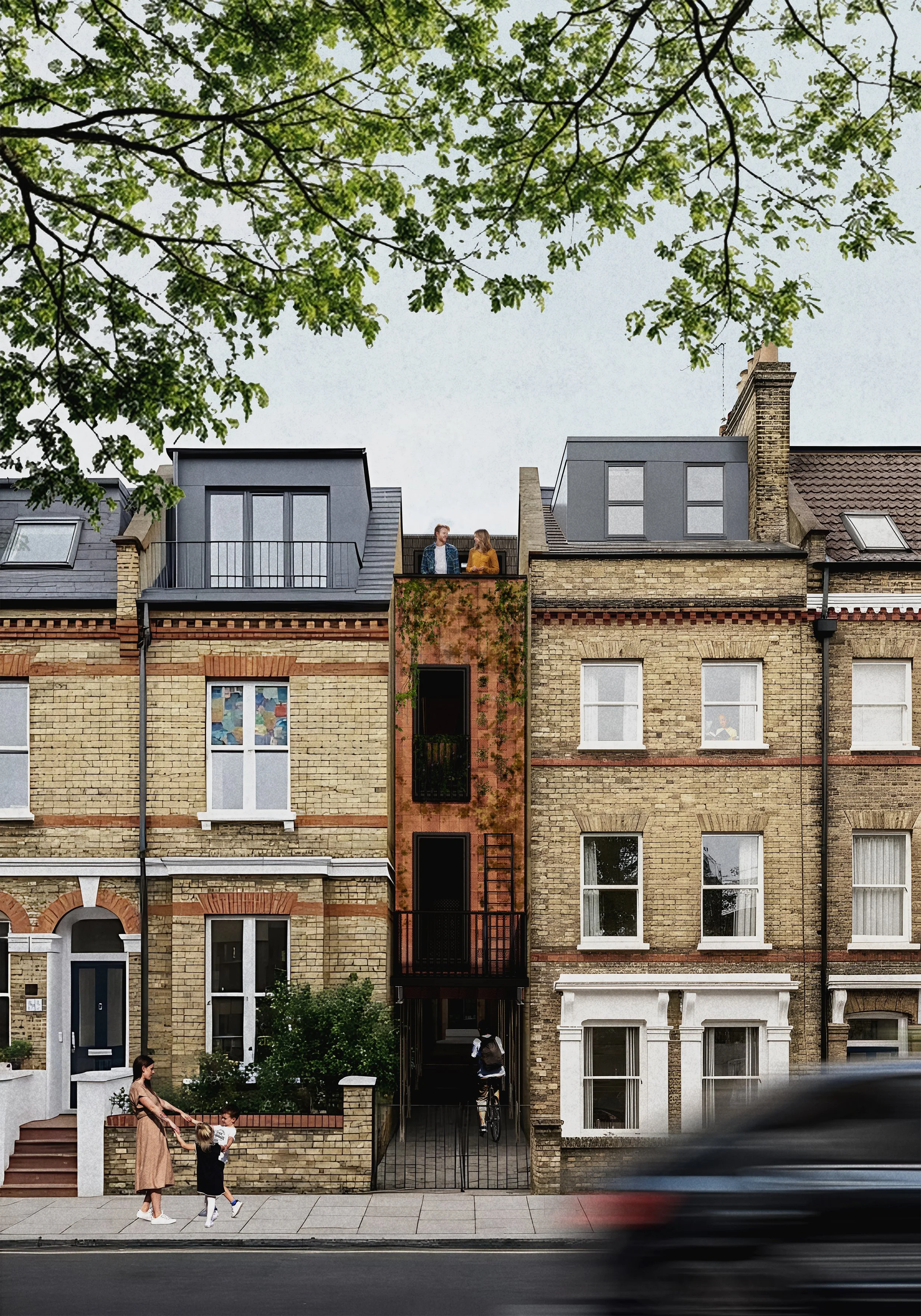
Liminal Housing: Unlocking Hidden Urban Capacity through Spatial Innovation
50 Opportunities Identified within a Short Walk of our Studio
The housing crisis is often framed as a shortage of land, but as architects, we believe it also demands greater imagination in how cities use what they already have. Over the summer, we took a 30-minute walk around our South London office with a specific lens: we looked for the ‘liminal’ - the narrow, forgotten pockets of land that fall through the cracks of traditional development.
In that half-hour, we identified over 50 potential sites for housing. These liminal fragments - end-of-terrace gaps, awkward corner plots, access routes, and redundant garages - recur across London, and other cities worldwide. Hidden in plain sight, they suggest an alternative path to density: building within the existing city.
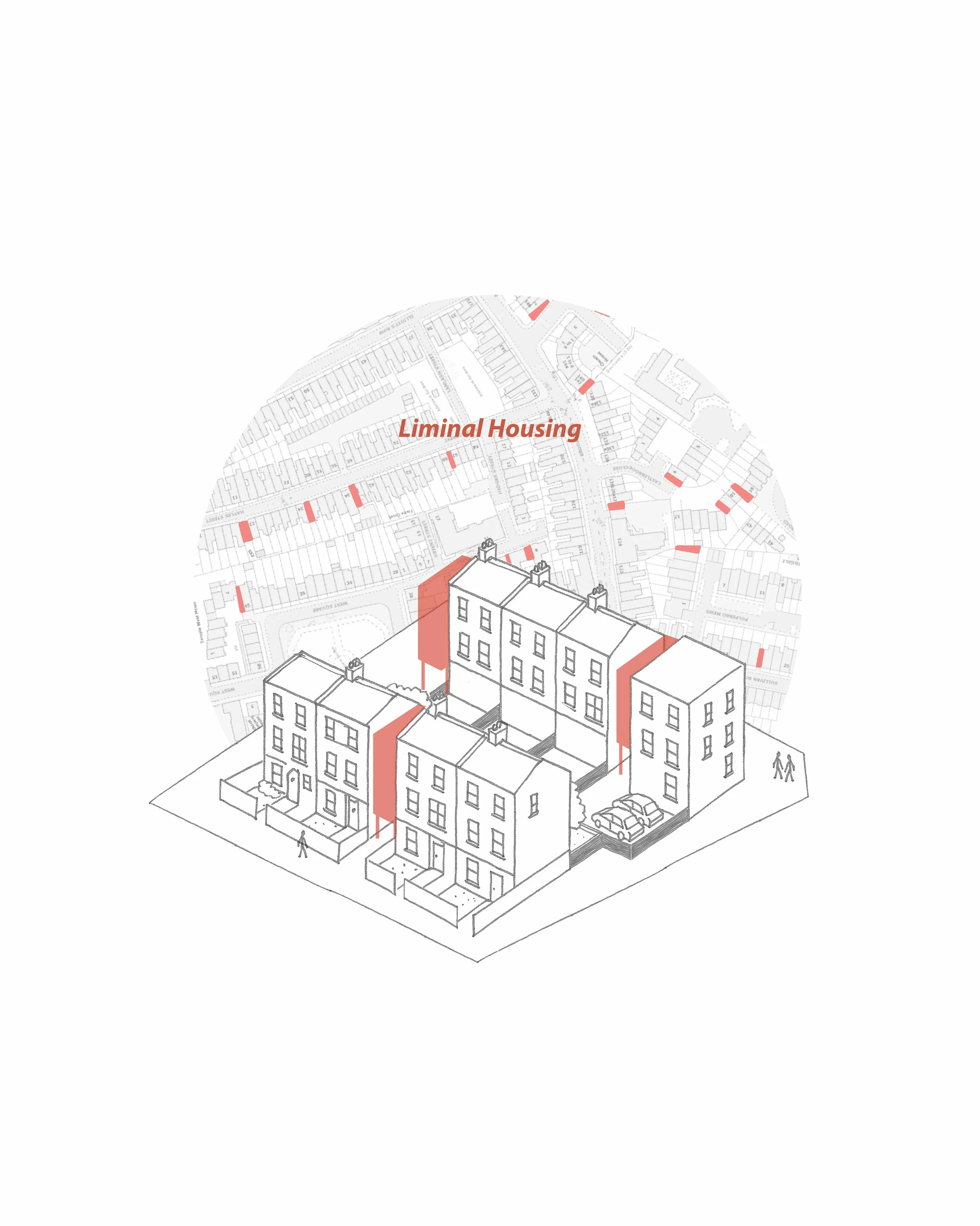
The Problem: Building Within the In-Between
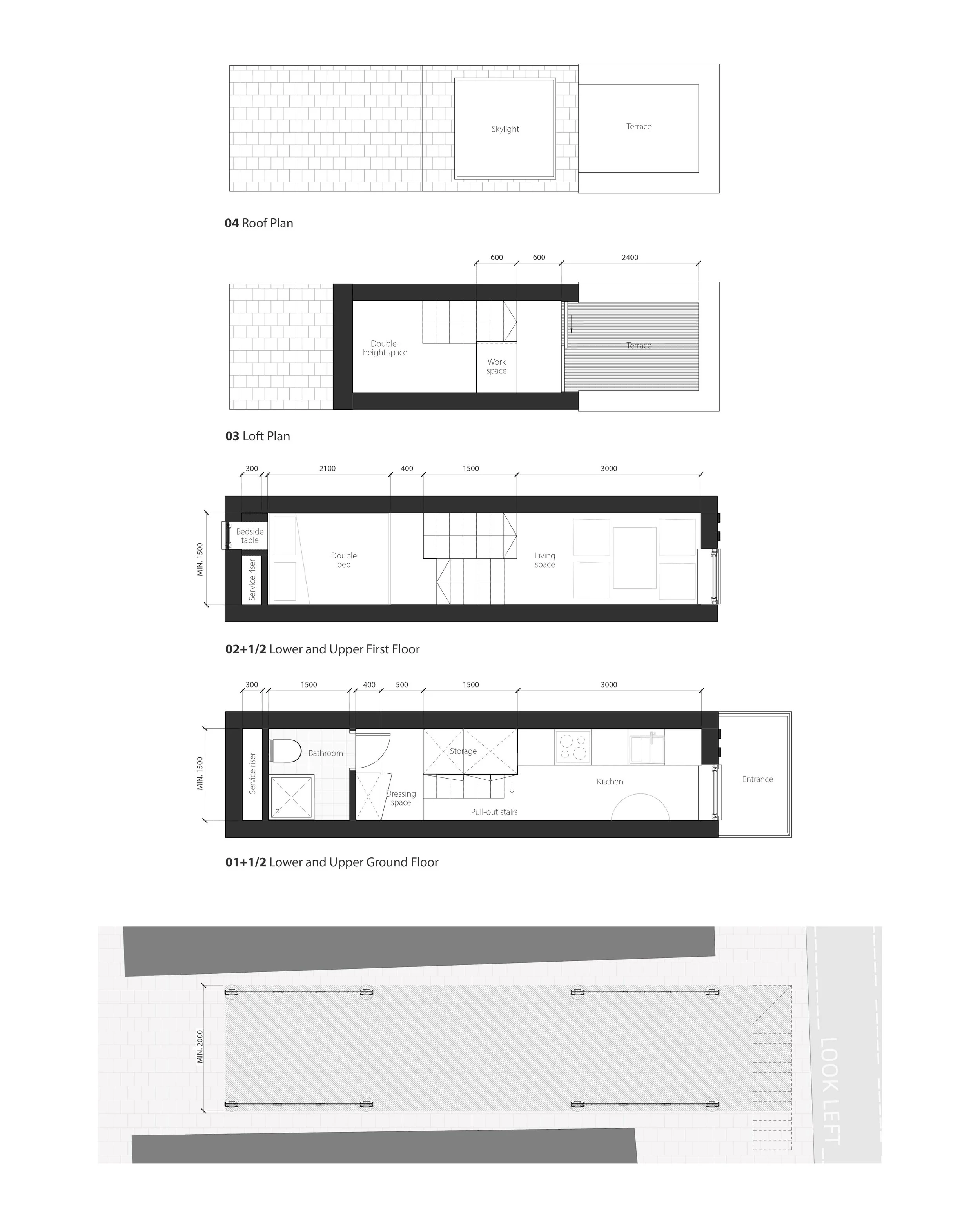
To test the viability of these sites, we asked a fundamental question: how can dignified, liveable housing be created within the narrowest and most constrained urban conditions? This led us to examine the dimensional logics already embedded in the city, particularly those around access routes and servicing. By ensuring our proposal could sit on plots that double as access routes which are common across London, we unlock land typically dismissed as unbuildable. We explored how existing London housing standards could be carefully reinterpreted through spatial design, without compromising liveability.
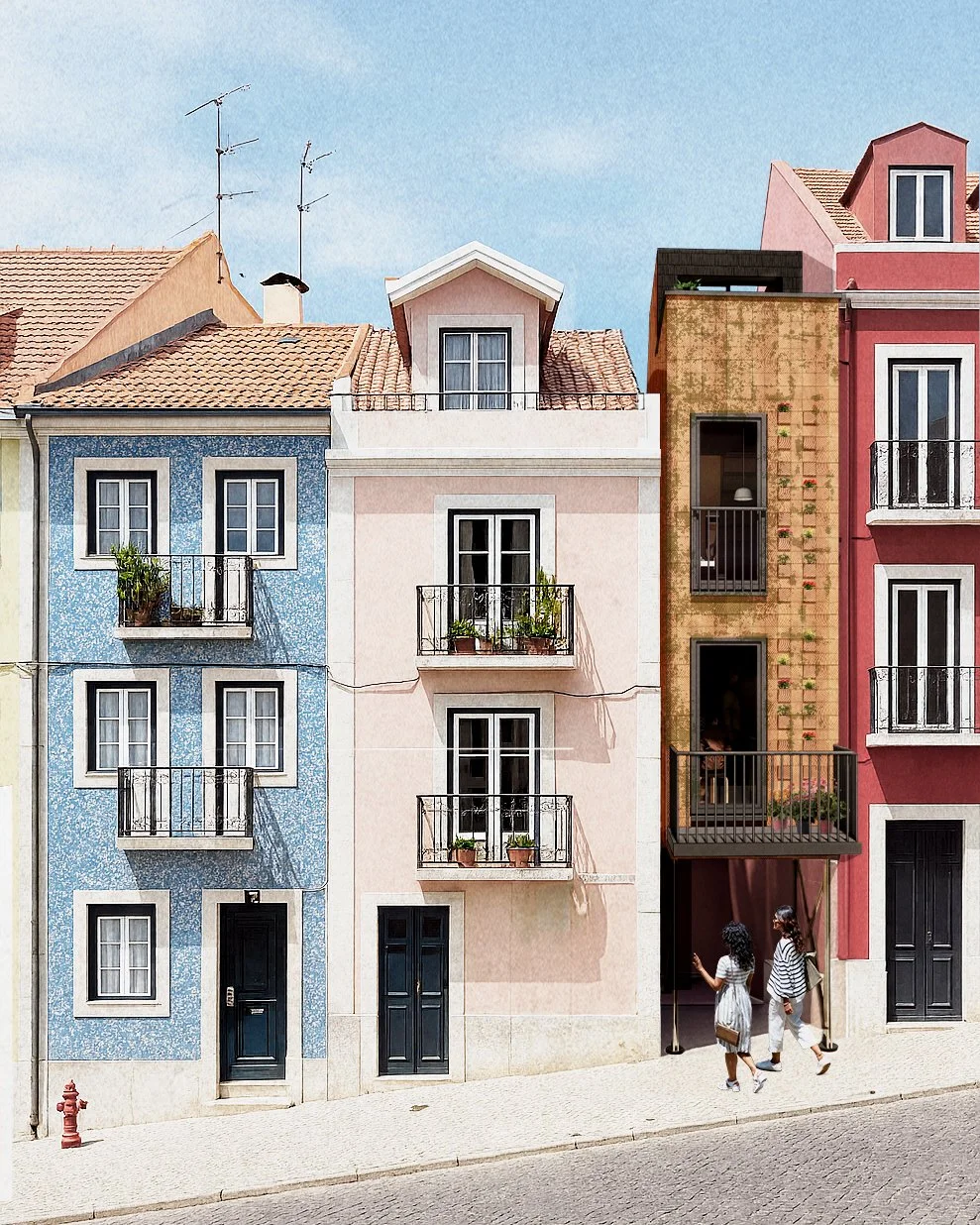
The result is a vertically layered home capable of operating within extremely narrow plots, of a minimum of 1.5m, while still accommodating all essential living functions. By elevating the primary living spaces, the ground level is freed to maintain vehicle or pedestrian access beneath -a spatial response to the regulatory and dimensional constraints that currently prevent housing from being delivered.
Designing the System, Not Just the Form
For liminal housing to work at scale, the construction system needed to do the heavy lifting. We therefore developed a scalable architectural framework in which standardised structural and service components - a robust kit of parts - could enable site-specific solutions.
The Technical Palette:
Screw Pile Foundations: Allows for construction on constrained plots with minimal ground works and zero vibration, protecting adjacent historic structures.
Lightweight Timber Frame: Combined with wood fibre SIP modules, the structure prioritises low-embodied carbon and high thermal performance.
Prefabricated Modular Construction: Units are built off-site and rapidly assembled, reducing cost, disruption, and build time in dense urban locations.
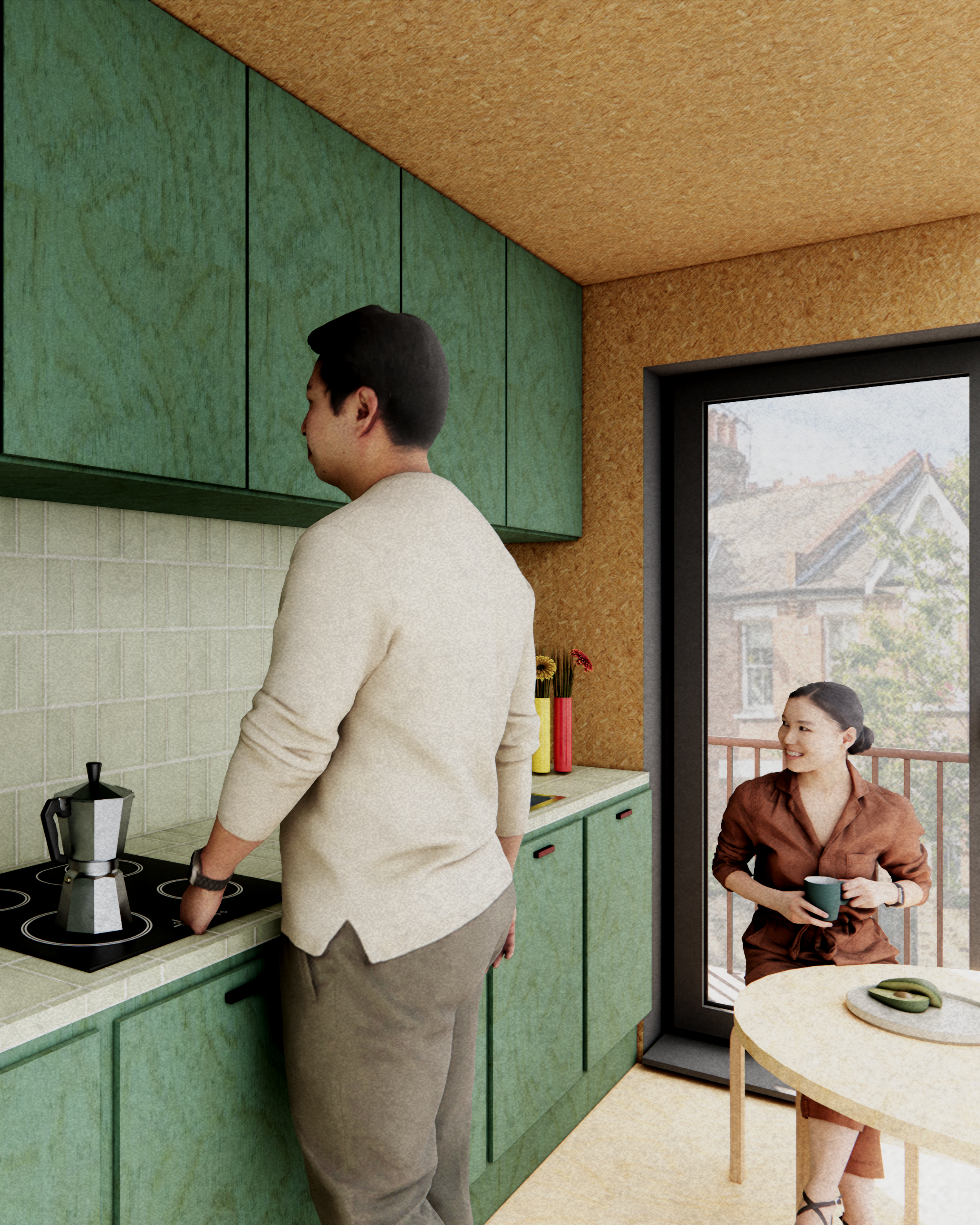
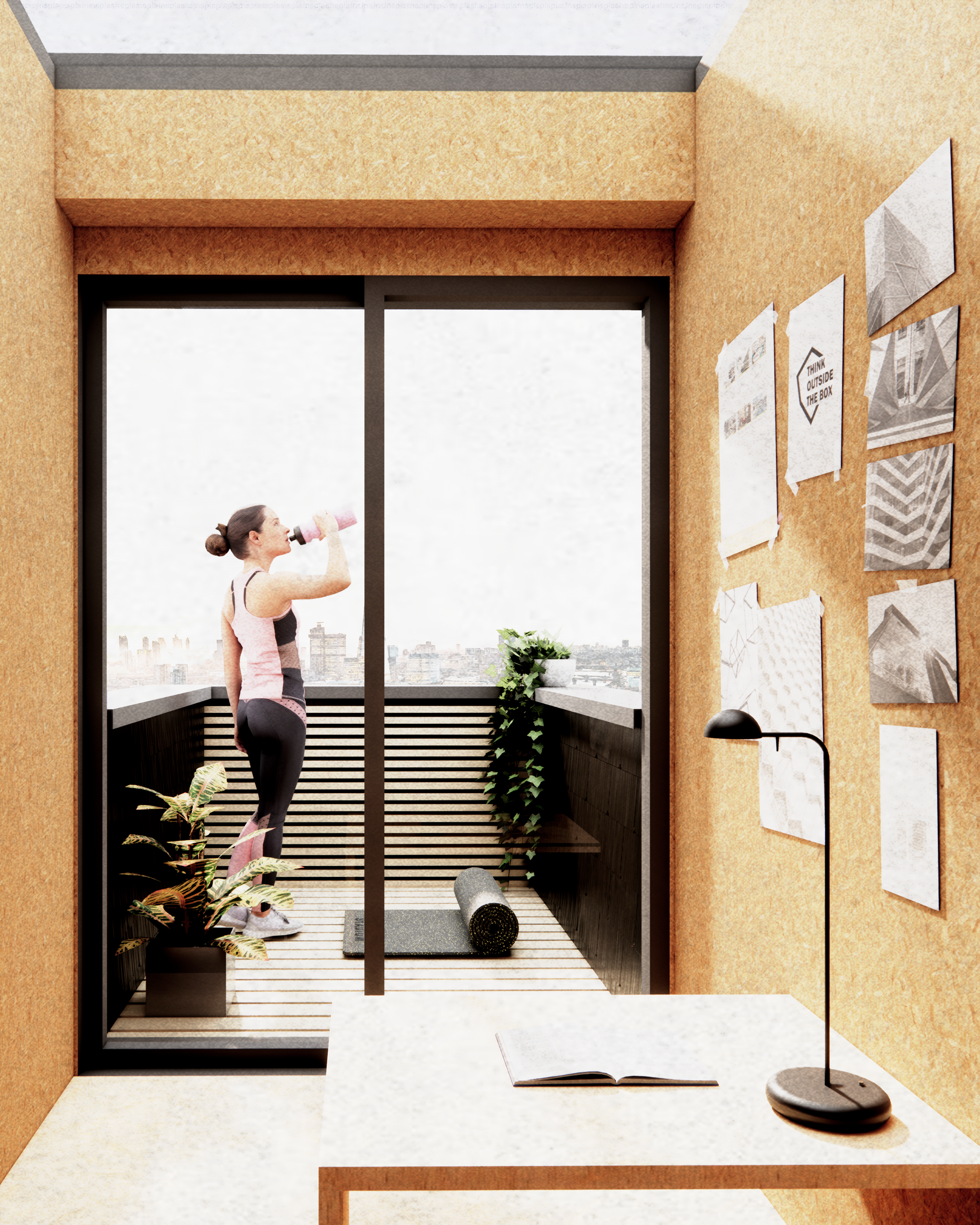
Exposed Plywood Finishes: A commitment to craftsmanship and material honesty that enhances the wellbeing of the inhabitant.
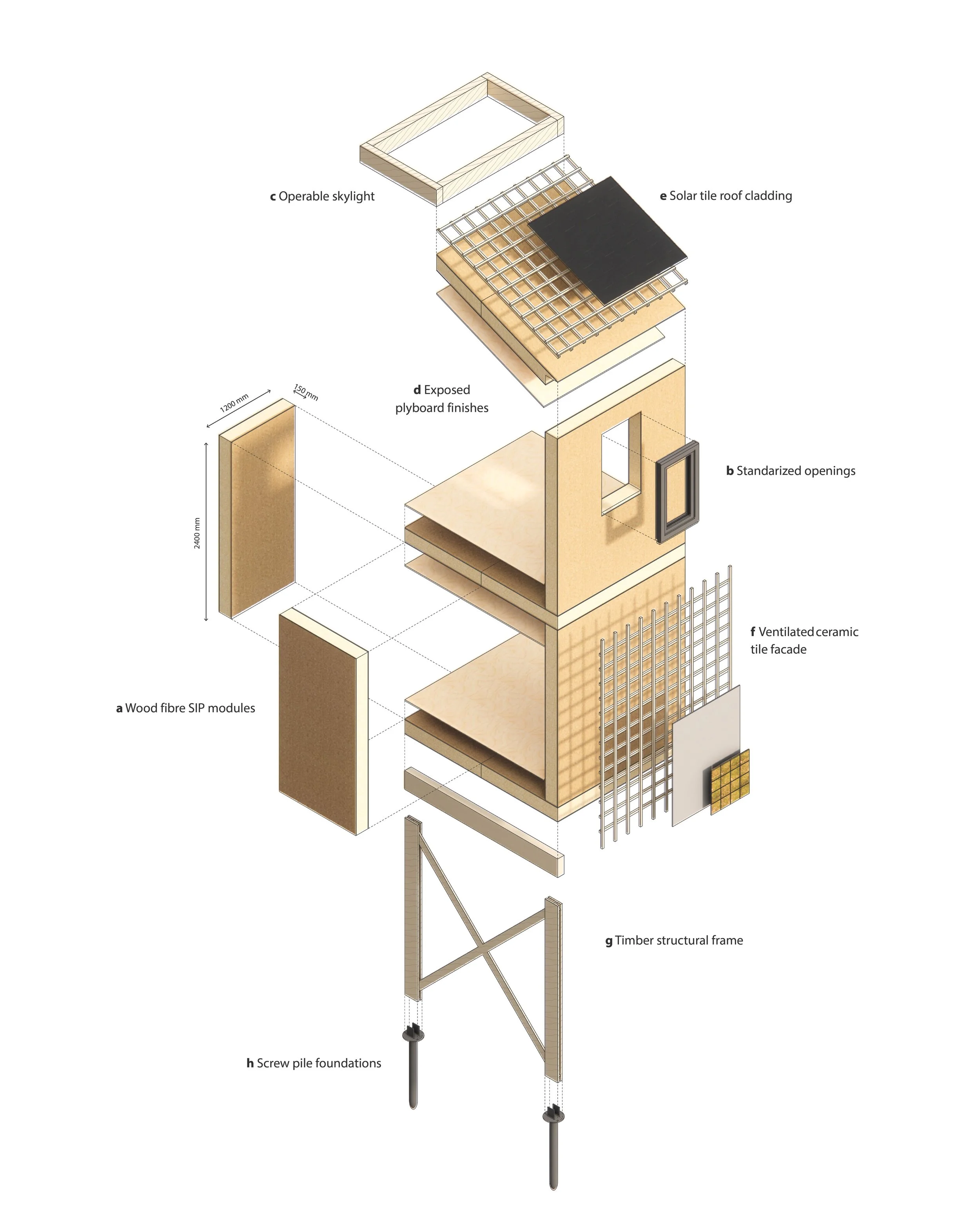
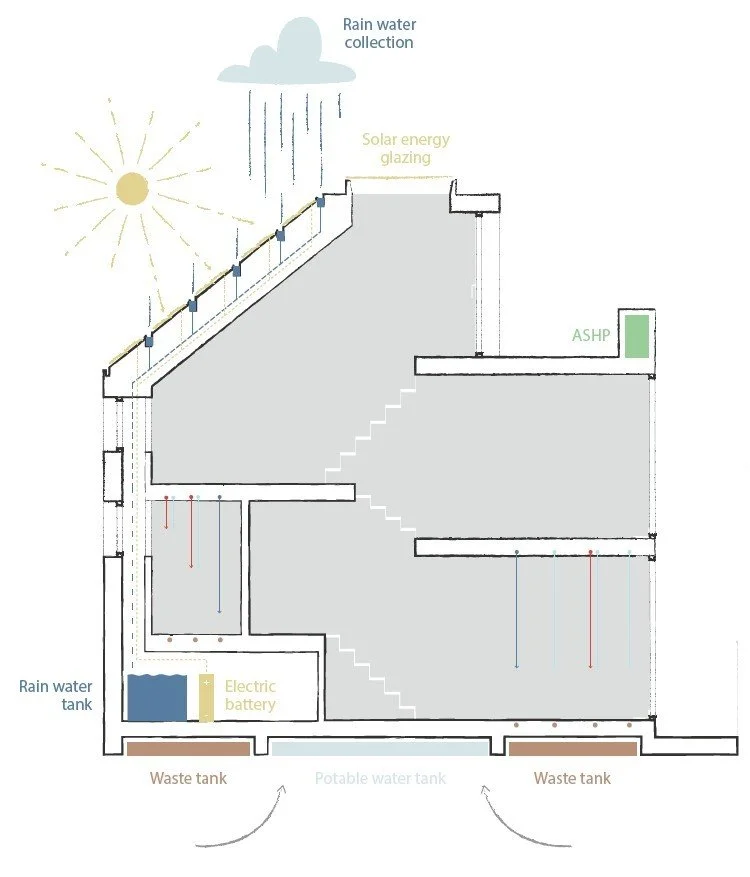
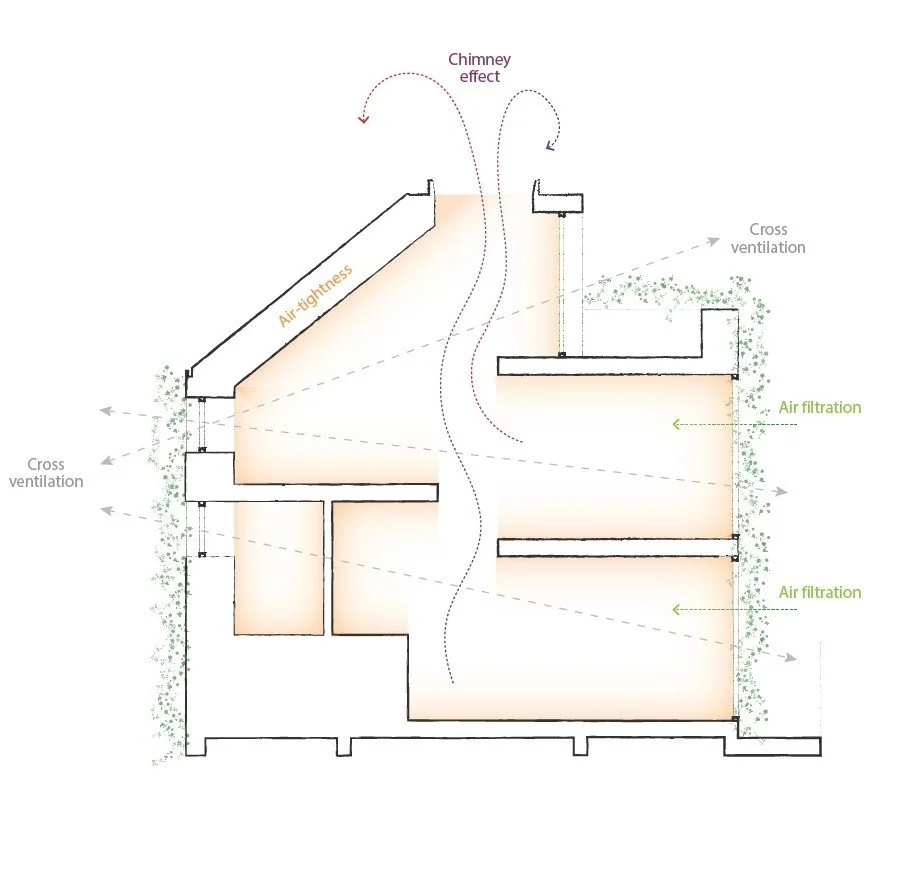
Moreover, sustainability is embedded in every aspect of the design. An active façade supports regionally appropriate mosses and climbing species, integrating biodiversity directly into the building envelope. Rainwater is harvested and filtered through concealed wall systems for reuse, while a super-insulated, Passivhaus-level envelope minimises operational demand. The home operates as a fully all-electric system, aligning with future energy standards and the ongoing decarbonisation of urban infrastructure. Designed for disassembly, every component can be reused or recycled, establishing a circular model for urban housing.
Sustainable By Design
Our Global Vision
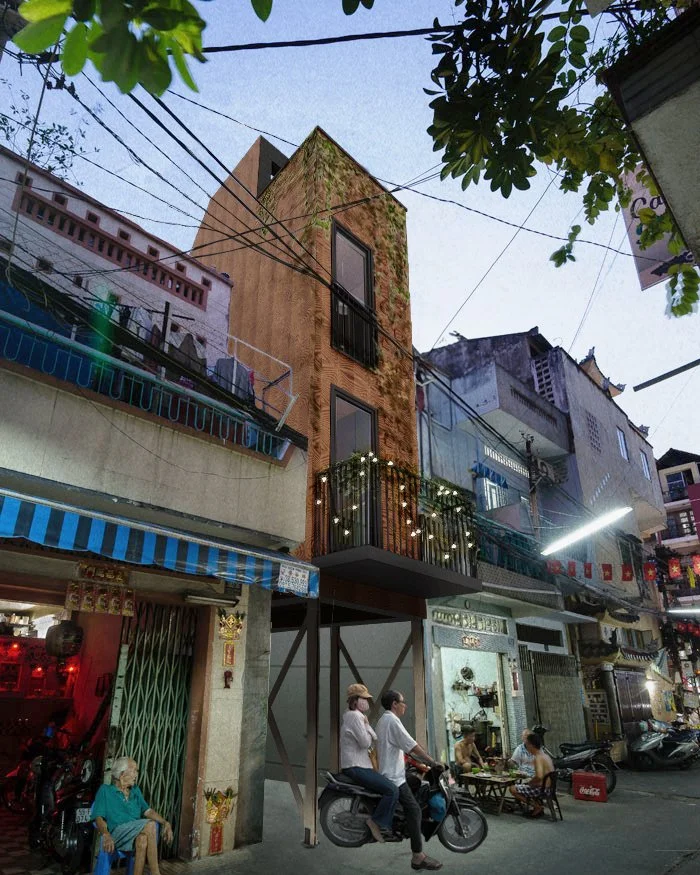
While this research began on a walk through London, the model is designed to be contextually responsive across the globe. The housing crisis is a universal urban challenge, and our architectural framework can be tuned to different climates and cultural contexts.
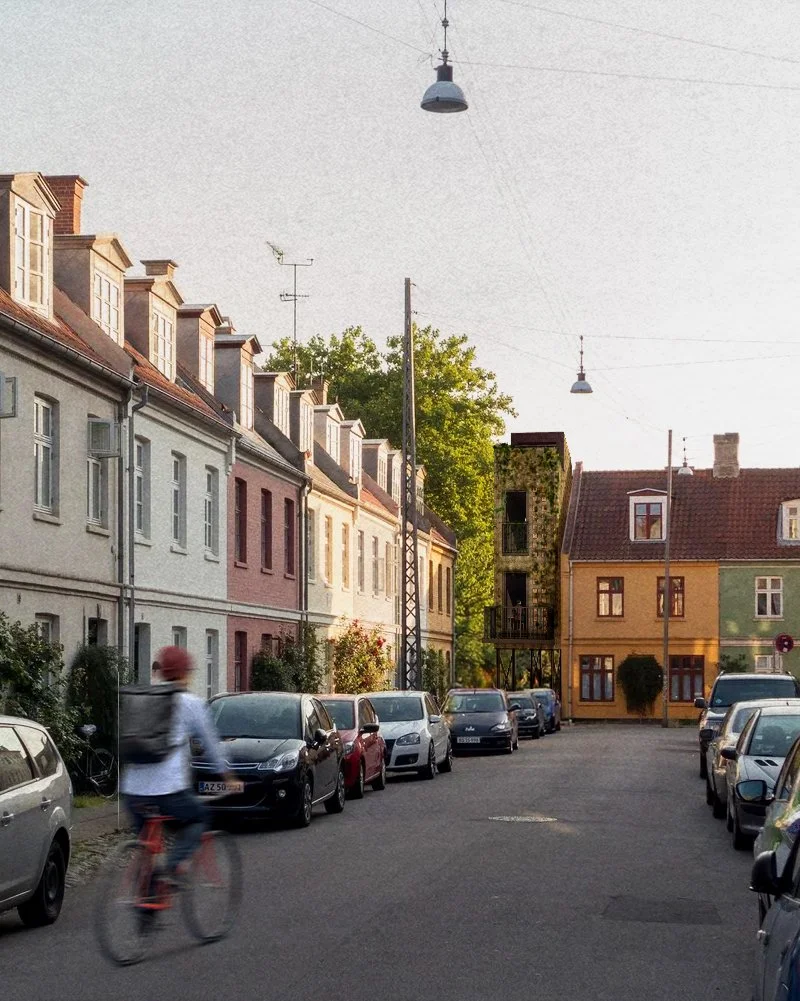
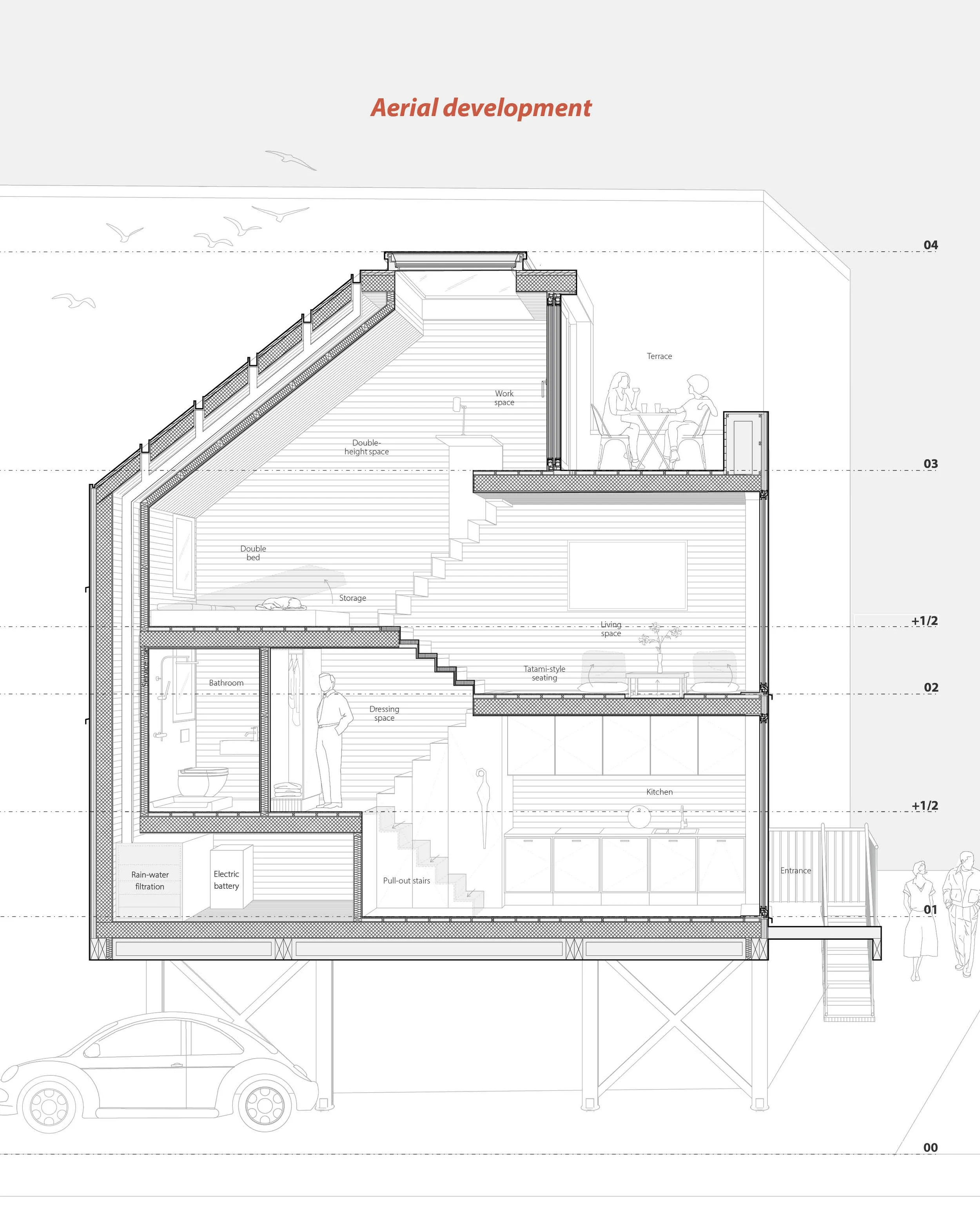
The Liminal Housing project began as a research exercise, but it reflects a conviction that architects must play a more active role in addressing the housing crisis. By engaging with regulation, construction, and viability, the project reframes architectural practice as a tool for making housing possible for all.
Are you a developer or landowner with a constrained urban site? This is an example of how we can work on tight sites. We are constantly looking to innovate around how to bring these spaces to life, and specialise in making good quality homes on small sites.
Leading the Solution
Our Final Designs
Take a look through the internal views to see life inside these narrow, adaptable homes!
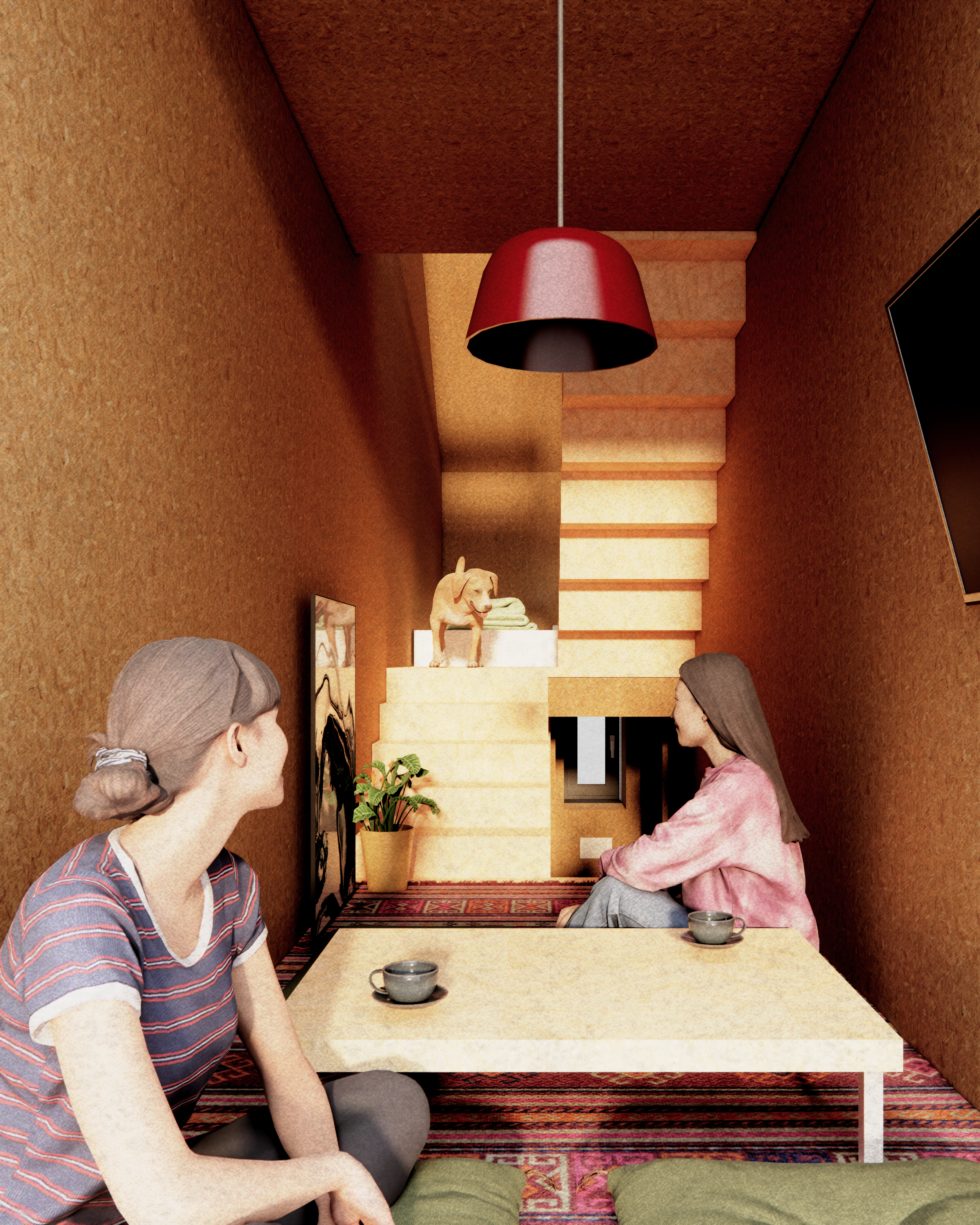
Studio Manifest Architects are specialists in urban spatial innovation. Whether it’s an end-of-terrace gap or a redundant access route, we excel at unlocking value in the most constrained locations. Our work spans architectural design, building services, and interior design, all focused on creating beautiful housing through clever design. If you are a developer or landowner with a complex site, please get in touch to see how we can bring it to life.